


Circle of Days by Ken Follett
The events predating and surrounding the creation of Stonehenge by people working with stone tools and limited technology at their disposal provide the basis of this stirring and exciting tale of one of the great achievements of human history.
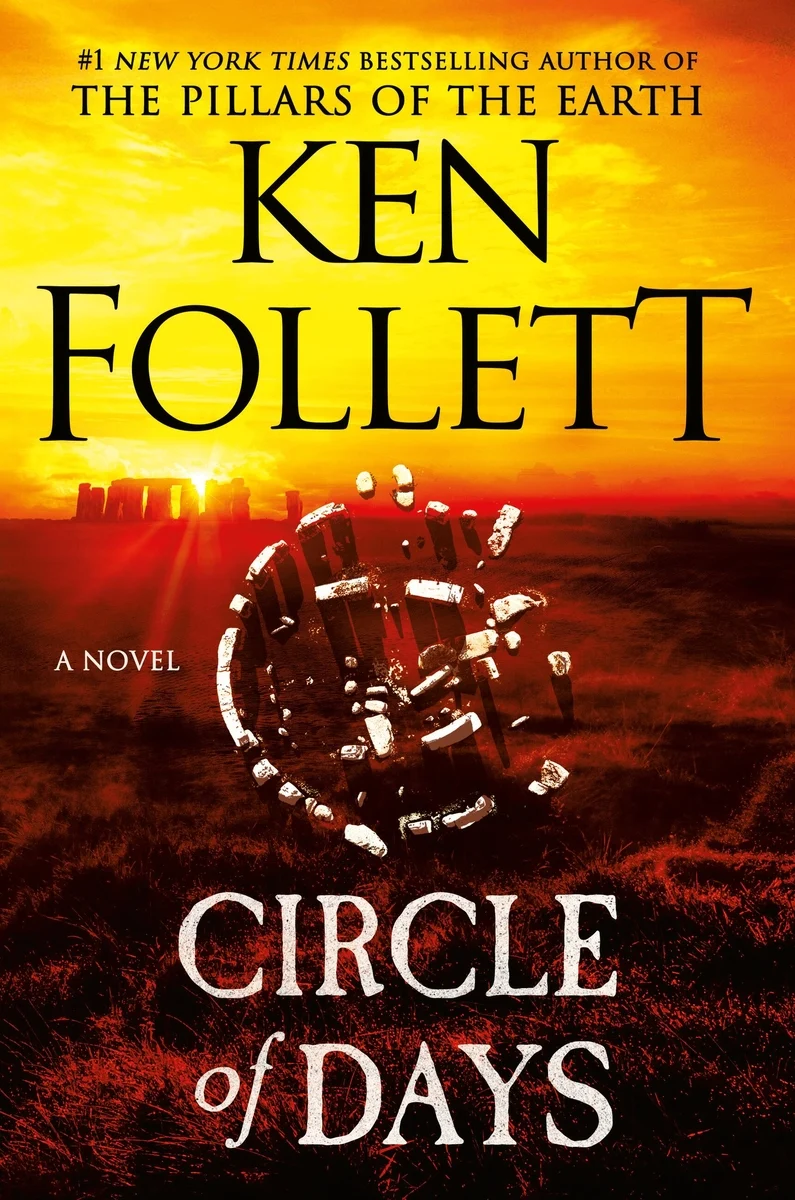
Ken Follett has, for many years and numerous novels been famous for making accessible monumental historic events, places and people. Here he tackles the creation of one of the world’s most mysterious and impressive structures, Stonehenge. Much has been written about the whys and wherefores of its construction and little else need be said about the factual details of this remarkable place. What the author has done here is give it a human face, telling a story of the kind of people who built it and how they overcame many hurdles to finally produce an artifact with cosmic, emotional, religious and cultural importance. This is, of course, fiction, but in the way of all good fiction it reveals truths about how the facts came to be and what they meant to those who participated in the events.
In stone-age Britain, there were three principal groups: herders, farmers and woodlanders. They lived quite differently, had different views of how life should be lived and seldom intermarried, although that did happen. What they shared was a belief in an overlooking deity, the Sun. This story concerns the herders, the keepers of cattle who, while settled were not as stationary or hidebound as the farmers but less freewheeling than the woodlanders. It is these folk who built the monuments and spent time understanding the meaning of numbers and astronomy. Seasonal celebrations occurred, centered around stone and wooden circles situated so that they acted as solar calendars. The people were spiritually bound to the growing and harvesting cycles dictated by the word of god, dictated by the placement of the sun and indicated by these solar clocks.
After a series of disasters which were partly the result of human error the wooden circle marking the yearly movement of the sun is destroyed. One of the principal characters in the tale decides that to preclude this happening in the future, stone must be used to replace wood, and in order to inspire the proper awe in the folk, the stones must be massive. The bulk of the story is in how the stones were found, raised, transported and placed to become what is now a world renowned monument. This is the story, and Follett is a master storyteller. The reader’s attention is unlikely to falter from the first page to the last.