


Drive Your Plow Over the Bones of the Dead by Olga Tokarczuk
Several murders in a small Polish village initiate a tale of revenge, ecological responsibility, community ties, friendship and hatred. First-class novel.
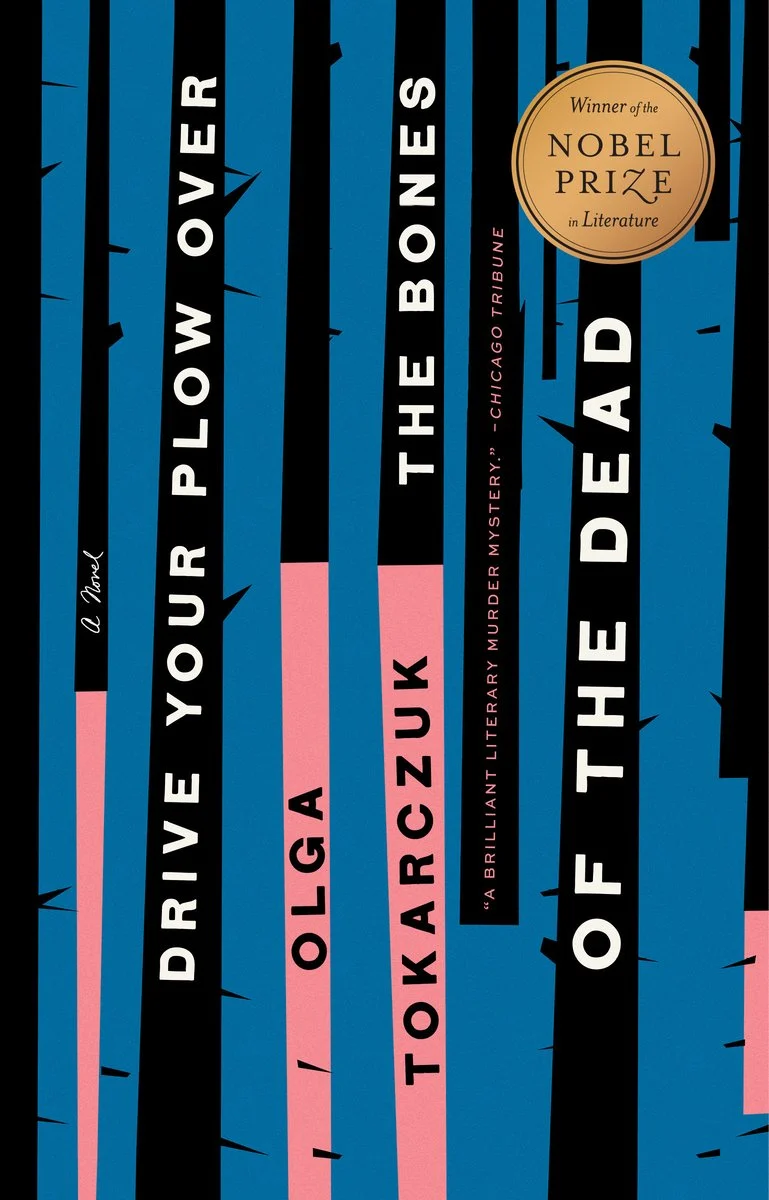
Drive Your Plow Over the Bones of the Dead by Olga Tokarczuk, translated by Antonia Lloyd-Jones
Riverhead
Paperback | $19
9780525541349
Olga Tokarczuk is a Nobel Prize winner for literature. She is the author of a number of notable works and this one is as remarkable as any of her others. The unusual and compelling title is derived from a William Blake Poem, “The Marriage of Heaven and Hell” from a section entitled “Proverbs of Hell”. It bears on the issue of change, the abandonment of past ways and moving into new thinking and ways of doing things.
Set in modern-day Poland, the story has echoes of fairy tale and myth stressing the element of animal spirituality. The protagonist is an elderly woman who is obsessed with astrology, vegetarianism and murder. Her less-than-savory neighbor is killed in a mysterious way, followed by the deaths of a number of other unlikable locals. She is sure she knows the culprit but is ignored by the police as a crank who is mentally unstable. An interesting feature of the tale is the inclusion of an item that fits within the definition of “Chekov’s gun”; that is, something that appears without an immediate explanation but which is seminal to the plot and is revealed later.
Ranging about her community, raising eyebrows and suspicions, she indulges her compulsion for translating Blake’s poetry and writing horoscopes for everyone she meets. In her estimation the movements and placement of the stars and planets are responsible for all things. Her dedication to the preservation of animals and their lives also informs much of her motivation.
Carefully written, intricately plotted and rife with detail about life in modern Poland the narrative travels over the ideas of community, mutual responsibility, nature and humankind in conflict and retribution. Brilliantly translated, the tale is compelling and engaging.